
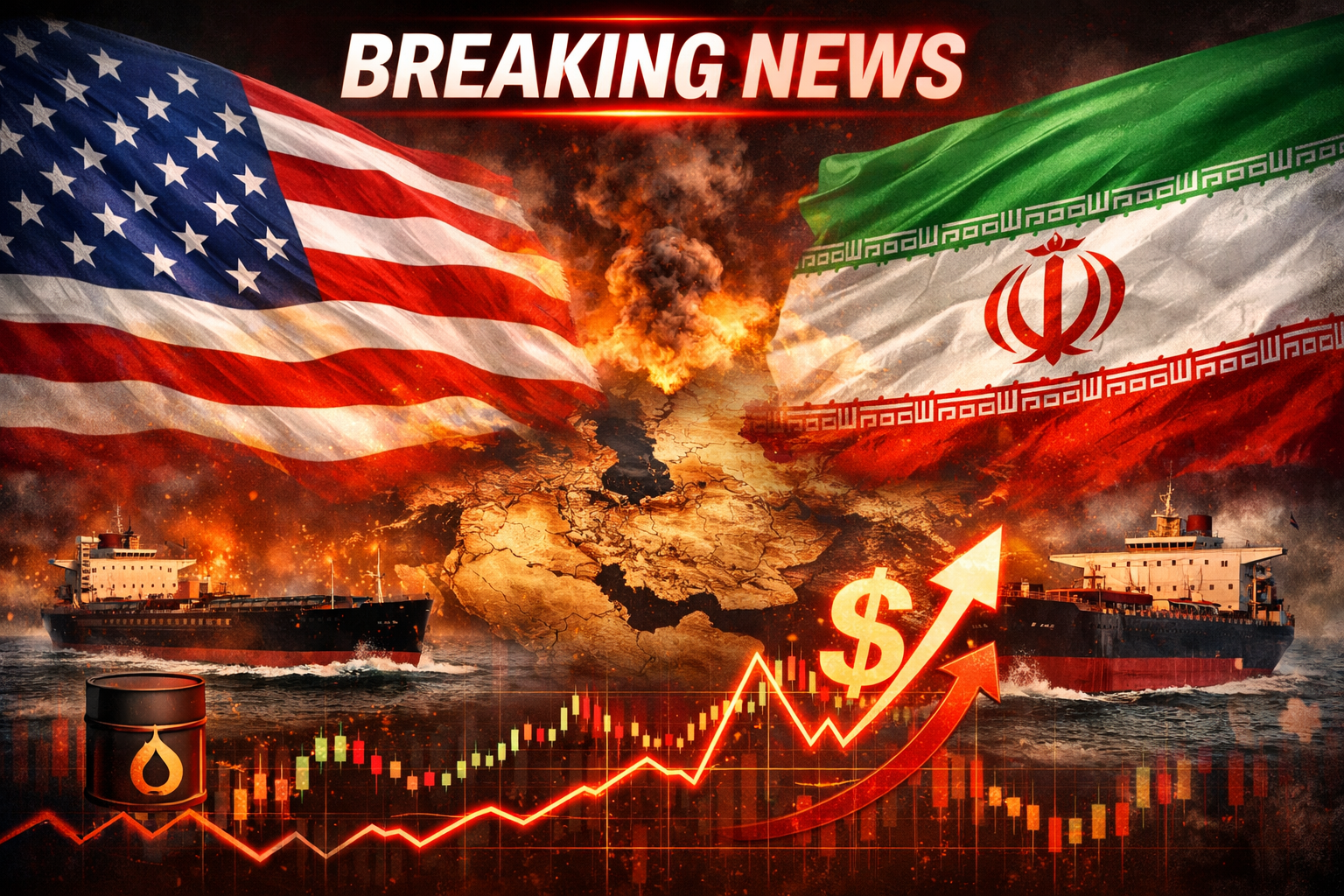
Escalating US–Iran Tensions Trigger Global Concern
The long-standing geopolitical rivalry between the United States and Iran has once again intensified, raising fears of a wider conflict across the Middle East. Military alerts, strategic deployments and diplomatic tensions have created a climate of uncertainty that is now being felt far beyond the region.
Geopolitical experts say that even limited military exchanges in the Gulf region can rapidly impact global energy markets and trade routes.
The Middle East remains one of the world’s most critical energy corridors, and any disruption in this region can trigger economic consequences for countries thousands of kilometers away.
Why the Strait of Hormuz Is the World’s Most Critical Oil Route
The Strait of Hormuz is widely considered the most important oil transit chokepoint in the world. Nearly one-third of globally traded crude oil passes through this narrow waterway between Iran and Oman.
If tensions escalate further, shipping companies may face serious operational risks while navigating through this strategic corridor.
Key facts about the Strait of Hormuz:
- Over 20 million barrels of oil pass through the strait every day.
- It connects the Persian Gulf to the global energy market.
- Several major oil exporters rely on this route for shipments.
- Any disruption could immediately push global oil prices higher.
Energy analysts warn that even a temporary closure or security incident in the strait could trigger a sharp spike in oil prices.
Oil Markets React to Rising Geopolitical Risk
Global crude markets have historically been sensitive to geopolitical developments in the Middle East. Investors closely track tensions between major regional powers because they directly affect oil supply expectations.
Recent developments between the US and Iran have already introduced volatility in commodity markets.
Possible economic consequences include:
- Rising crude oil prices
- Higher petrol and diesel costs worldwide
- Increased transportation expenses
- Inflationary pressure on emerging economies
Energy traders often describe geopolitical risk as an invisible price factor in oil markets. When tensions rise, prices typically increase even before actual supply disruptions occur.
Impact on India’s Energy Security
For India, the situation carries particular importance. The country imports a large share of its crude oil requirements from the Middle East.
India imports nearly 85% of its crude oil demand. A significant portion of this supply originates from Gulf nations that rely on shipping routes passing near Iranian waters.
If tensions escalate further, India could face several challenges:
- Higher domestic fuel prices
- Pressure on inflation
- Increased import bills
- Volatility in financial markets
Indian policymakers are therefore closely monitoring developments while also diversifying energy import sources.
Shipping and Global Trade Under Pressure
Beyond oil markets, the US–Iran tensions could also impact global trade logistics. Commercial shipping routes across the Gulf are vital for energy supplies as well as container trade.
Maritime security experts warn that rising tensions could lead to:
- Higher insurance premiums for cargo vessels
- Increased naval patrols in the Gulf
- Shipping route diversions
- Higher freight costs globally
Any prolonged instability in the region could slow global supply chains, particularly for industries that rely heavily on energy imports.
Diplomatic Efforts to De-Escalate the Crisis
Several world leaders have urged restraint and dialogue in order to avoid further escalation. Diplomatic channels between multiple countries remain active as global powers attempt to prevent a broader conflict.
International organizations have emphasized that diplomatic engagement remains the most effective path toward reducing tensions.
While military posturing often dominates headlines, experts believe that quiet diplomatic negotiations frequently play a crucial role in preventing conflicts from spiraling out of control.
Global Financial Markets Watching Closely
Financial markets around the world are also paying close attention to developments in the Middle East.
Historically, geopolitical crises have influenced investor sentiment, often triggering volatility in global stock markets.
Markets most sensitive to the conflict include:
Energy companies
- Defense sector stocks
- Shipping and logistics firms
- Commodity markets
Investors often move toward safer assets such as gold when geopolitical tensions increase.
What Comes Next in the US–Iran Crisis
The future trajectory of the US–Iran tensions remains uncertain. Much will depend on diplomatic developments, regional alliances and the actions taken by both governments.
While analysts currently view a full-scale war as unlikely, the situation highlights how fragile geopolitical stability can be in one of the world’s most strategically important regions.
For the global economy, energy security and international diplomacy, the coming weeks could prove crucial.